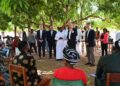



Burkina Faso, Mali and Niger have officially launched a joint regional military force, deepening security cooperation as the three junta-led nations confront escalating Islamist insurgencies across the Sahel. The new force was unveiled during a ceremony at an air force base in Bamako, Mali, on Monday.

Mali’s military leader, General Assimi Goita, presided over the event, which marked another step toward closer political and military integration among the three countries. The force is designed to allow coordinated military action against armed groups operating across their shared borders.
The Sahel force brings together troops from Burkina Faso, Mali and Niger, all of which have struggled to contain insurgent violence despite years of domestic and international military operations. The region has seen persistent attacks on civilians, soldiers, and infrastructure, particularly in rural and border communities.
Earlier this year, Niger’s defence minister disclosed that the force would comprise about 5,000 troops and would be capable of joint intervention against security threats. The new structure is intended to improve coordination, intelligence sharing, and rapid response across national boundaries.
Burkinabe General Daouda Traoré has been appointed commander of the regional force. Its permanent command base will be located in Niamey, Niger’s capital, reinforcing the country’s central role in the alliance’s security architecture.
The launch ceremony in Bamako was attended by defence ministers from the three Sahel Alliance states, along with ambassadors and representatives of international organisations accredited to Mali. The presence of foreign envoys underscored regional and international interest in the bloc’s evolving security strategy.
The unified force is the latest initiative under the Alliance of Sahel States, formed by Burkina Faso, Mali and Niger after their withdrawal from the Economic Community of West African States. The three governments accused ECOWAS of imposing harsh and unjust sanctions following military takeovers and acting against the interests of their populations.
Since exiting ECOWAS, the alliance members have accelerated efforts to align their defence, foreign policy and economic strategies. Security cooperation has emerged as a central pillar, with leaders arguing that regional self-reliance is essential to defeating insurgent groups.
Analysts say the success of the joint force will depend on sustained funding, operational discipline and the ability to overcome logistical challenges across vast and difficult terrain. Questions also remain about how the new force will interact with existing international counterterrorism efforts in the region.
For now, the launch sends a clear signal that Burkina Faso, Mali and Niger intend to confront their shared security threats together, betting that unity and regional control will succeed where fragmented efforts have struggled.